
In an ocean of content creators, all demanding their slice of our digital attention,
The Old Kids Co seems very different
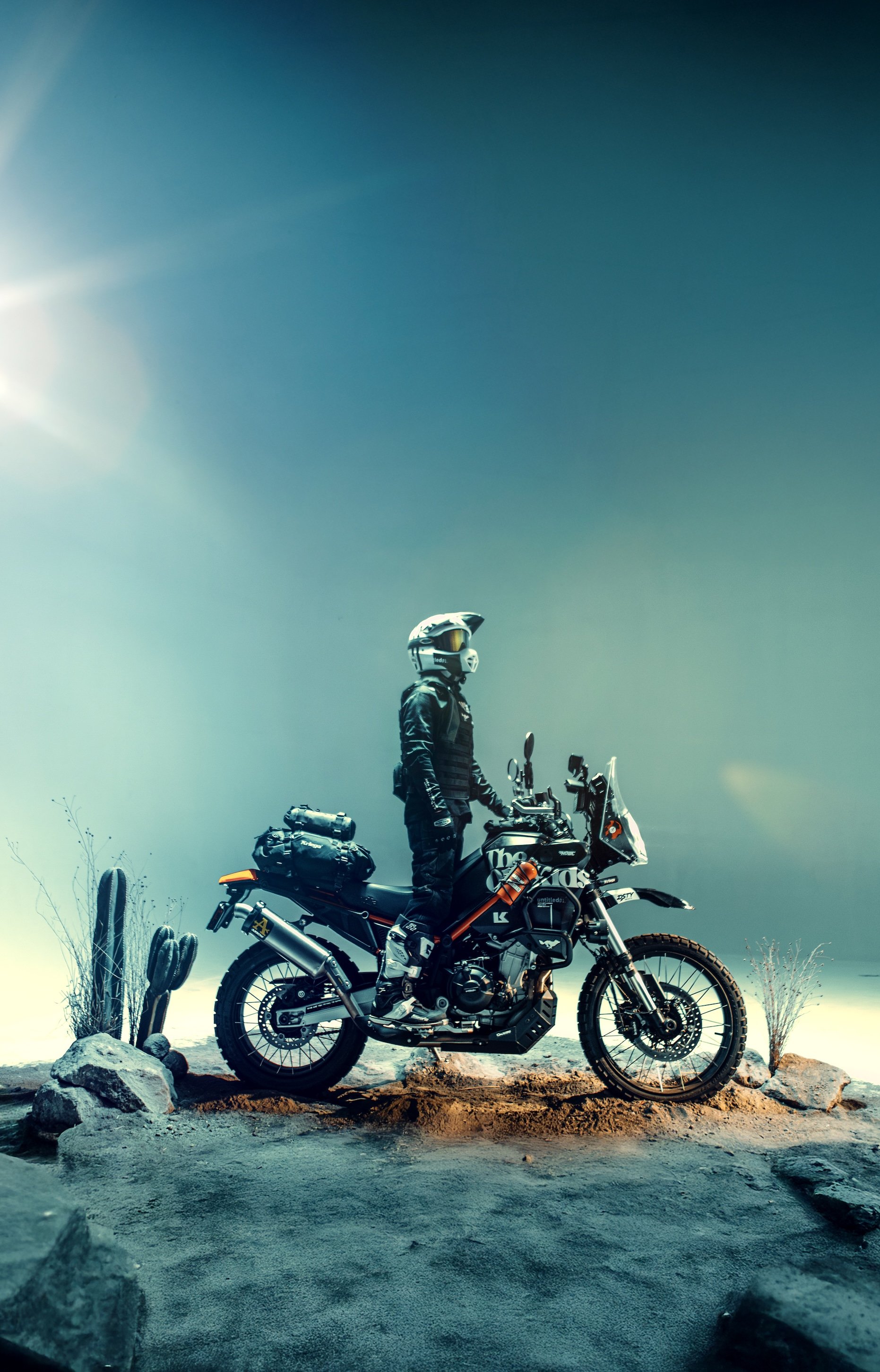
An Instagram account named The Old Kids Co appeared on our feed with a style of studio photography that immediately grabbed our attention. We kept following and saw the same bike, an Aprilia Tuareg 660 kitted out with Kriega OS-Rackless luggage, heading north to, we thought, Alaska. It was time to get in touch with Javier, the person behind the account, to discover what The Old Kids Co really is.
KRIEGA: Please start by telling us a bit about yourself.
Javier: I’m 40 years old and I live in Mexico City. I’ve been working in the audiovisual industry for over 18 years as a director, audiovisual producer and creative. Most of what I do is tell stories through video. I naturally think in movement, scenes, rhythm and how everything works together to tell a story.
I’ve always wanted to explore and create things on my own. Sometimes just because I want to try something, learn something new or make something that excites me. Old Kids eventually came out of that need.
What’s the idea behind Old Kids Co?
Old Kids came from a pretty simple idea: growing up doesn’t mean you have to stop playing. It’s not really about age, it’s more about still getting excited about things, wanting to learn something new, trying something different, or sometimes just doing something because you think it’s cool.
I think as we grow up, we start looking for a reason behind everything. Work has to serve a purpose, projects need an objective, and now it even feels like every hobby needs to become something you can monetise. Old Kids became a space where I don’t need to do that.
Motorcycles were the excuse to start all of this, and they’re still the thread connecting pretty much everything I do with Old Kids.
As long as Old Kids keeps being an excuse to have fun and make things that excite me, it will keep making sense to me.
What is your motorcycling history?
My story with motorcycles started around 14 years ago when I needed a cheap and fast way to move around Mexico City, so I bought a scooter. I didn’t have anyone to introduce me to this world, so I basically started from zero.
After that I bought a Husqvarna Vitpilen 701, which was my first big bike. That’s when I realized how much I loved traveling by motorcycle, especially traveling alone. That eventually took me into the adventure and off-road world, and I bought a Royal Enfield Himalayan. That bike changed my relationship with motorcycles because I really started modifying in my own way.
I have a hard time leaving things the way they come from the factory. I always end up thinking about what I can change, how I can make something different, or simply how I can make it feel more like mine.
I got more into adventure riding and eventually I bought an Aprilia Tuareg in June 2025, which is where I am now. This time I wanted to build a whole project around it and then actually use it for what it was made for.
Why did you choose the Tuareg?
I looked at the Ténéré and Africa Twin, but I’ve always been attracted to things that are a little less obvious. The salesman told me, ‘You’re buying a unicorn’. I laughed, but he explained there were very few of them in Mexico. I remember thinking, Perfect, I’m probably buying the right bike.
I’ve also always loved Aprilia and Italian motorcycles in general. The Tuareg had the design I wanted, it was a very capable adventure bike, and because there weren’t many of them around, it felt like a great platform to build something of my own.
What modifications have you made to it?
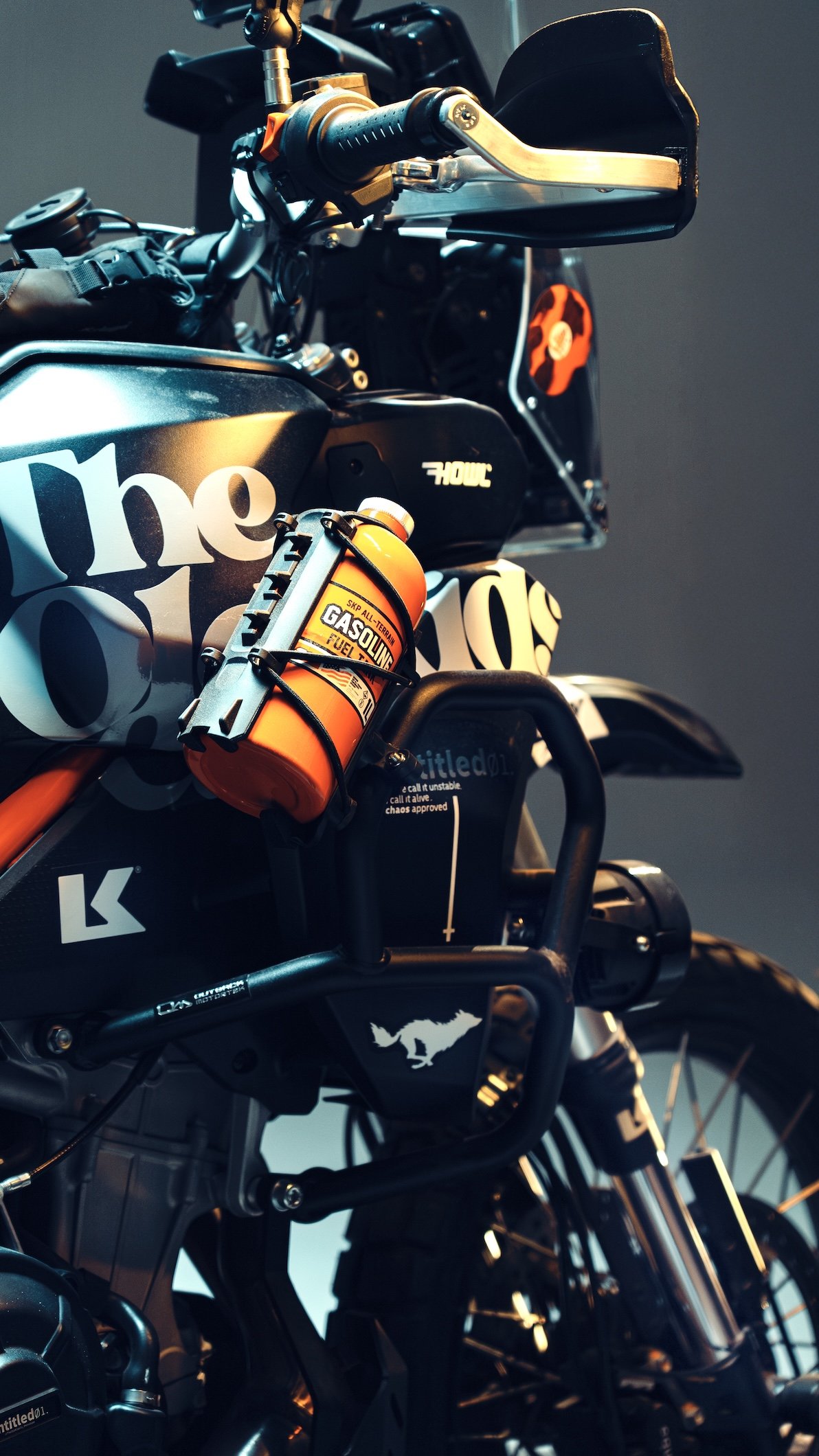
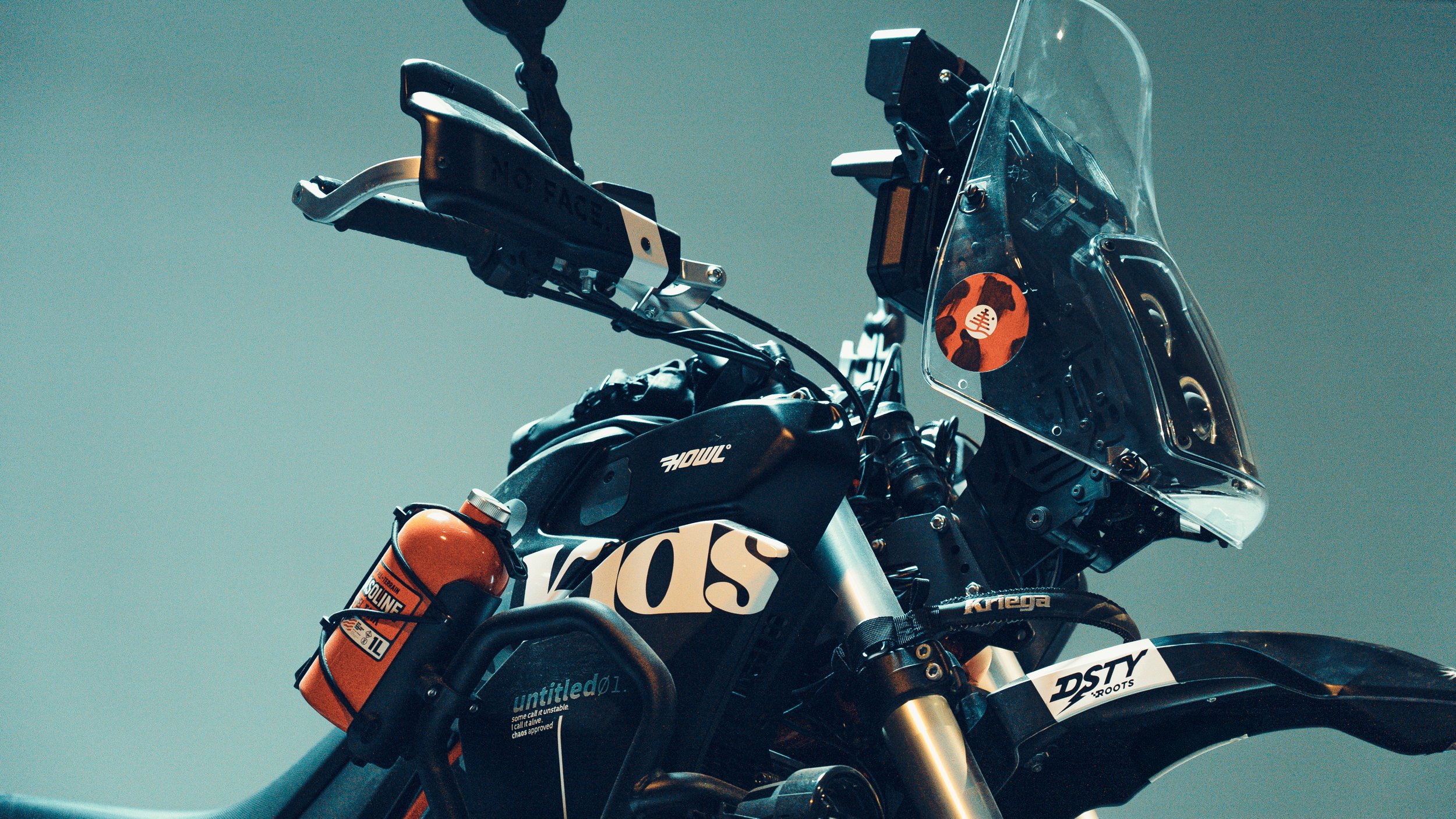
I removed the original fairing and lighting system and adapted a GORM Moto NX650 Rally Tower with LSK Electronics lighting from Sweden.
It isn’t designed for the Tuareg, so with the help of my friends at HOWL, the studio that helped me bring the whole build to life, we designed and fabricated a custom structure to mount it.
I tried to keep as much of the original wiring untouched as possible and we moved everything into a sealed Pelican case. I knew I wanted to travel a lot of kilometres on this bike, so it had to work.
From there I added PIAA auxiliary lights, a titanium Arrow exhaust, Outback Motortek protection, Barkbusters, rally-style front fender, and several custom 3D-printed parts and protective parts made specifically for the bike.
Adapting, fabricating or modifying things was necessary because there weren’t many aftermarket parts available for the Tuareg, but that made the whole thing more fun.
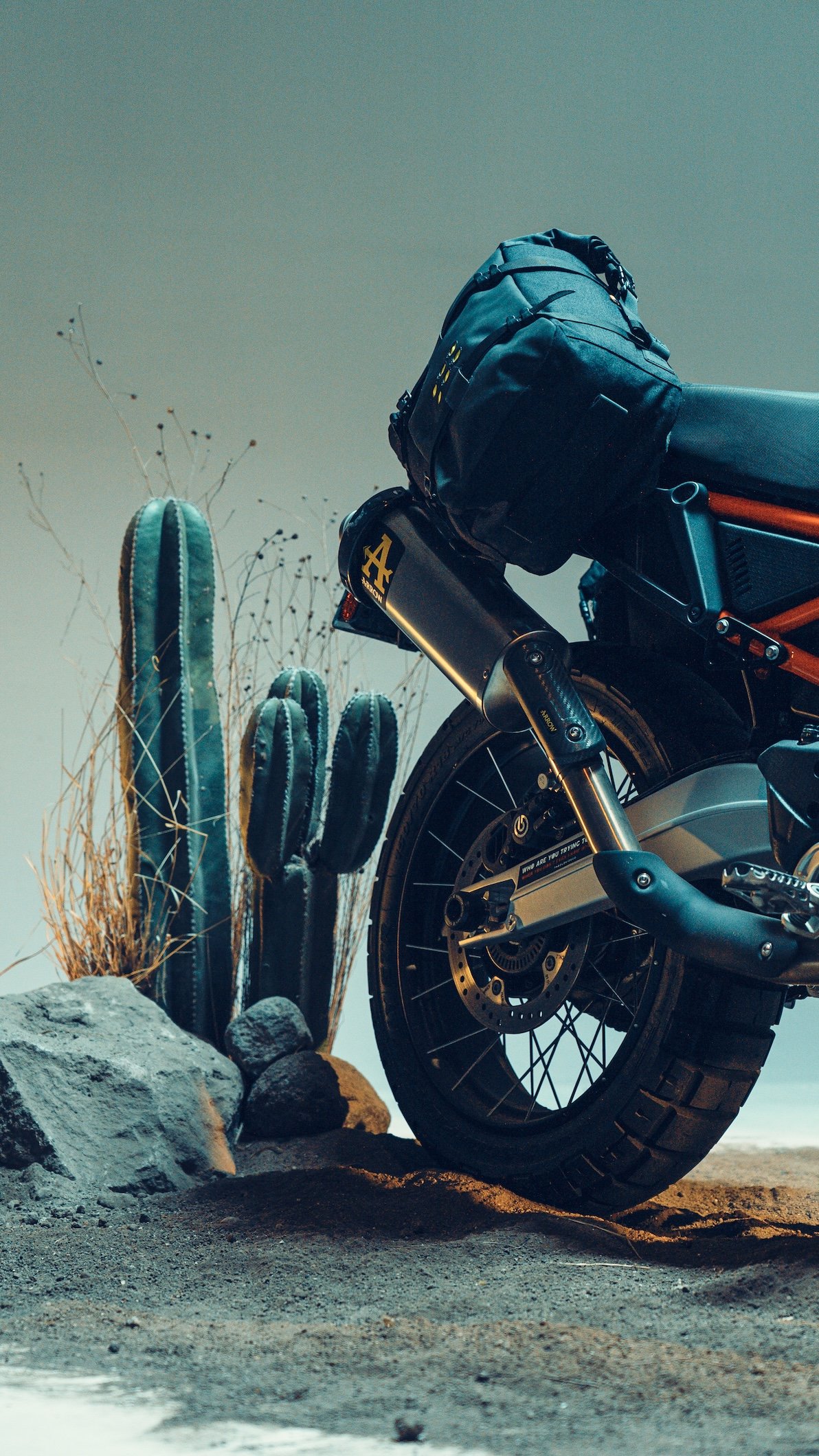
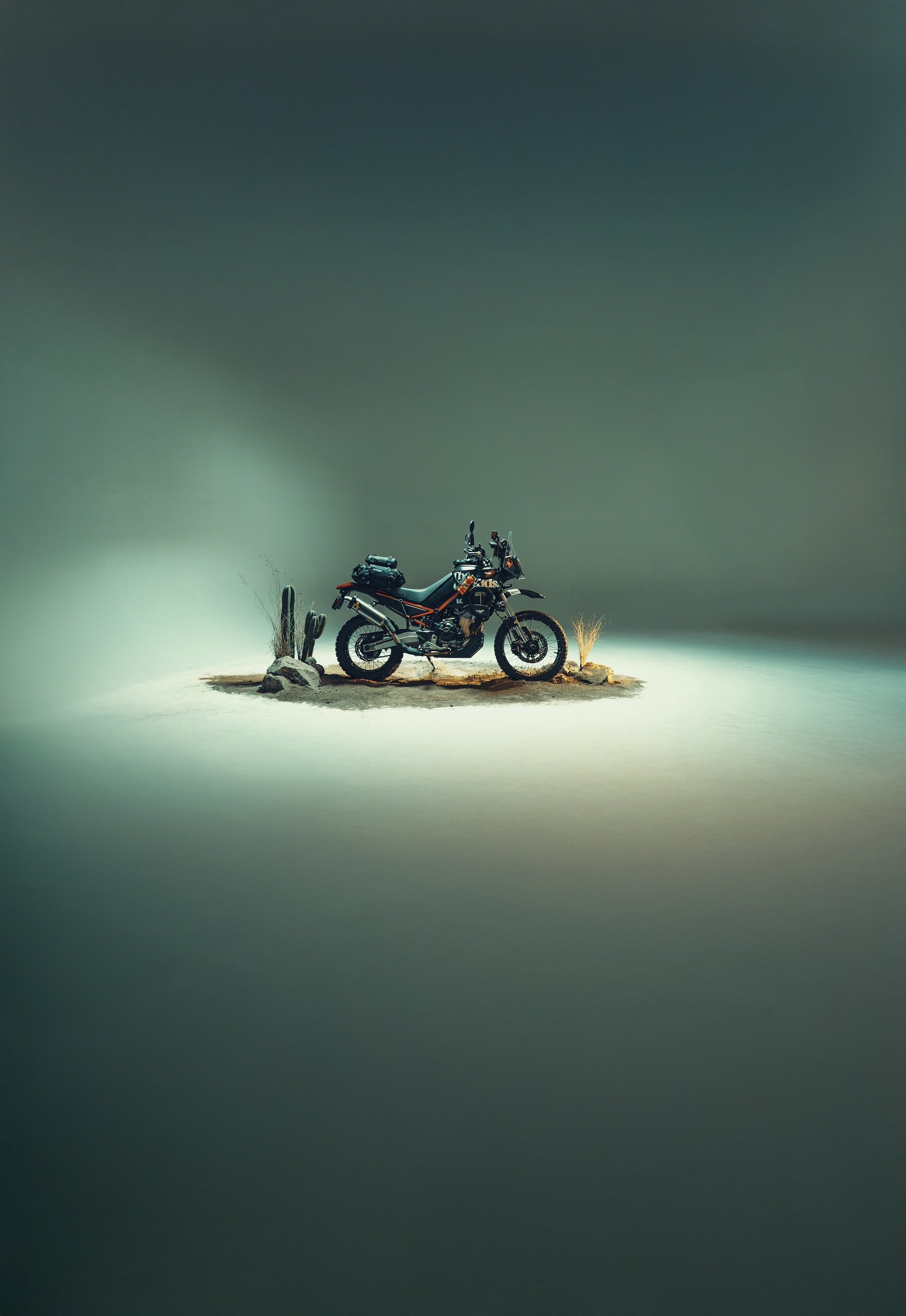
The studio photoshoot really caught our eye. Is it an example of you being creative for fun or something else?
I think that’s exactly what it is, just playing and having fun with ideas. My work is in directing, producing and creating audiovisual content, so naturally I end up using a lot of the same tools and ways of thinking in Old Kids. The big difference is that there’s no commercial side behind it.
Nobody asked me to make those photos. There was no brief, no client and nothing I needed to sell. I just had an idea in my head and wanted to see it come to life.
You make a few references to being faceless in your posts, why is that important?
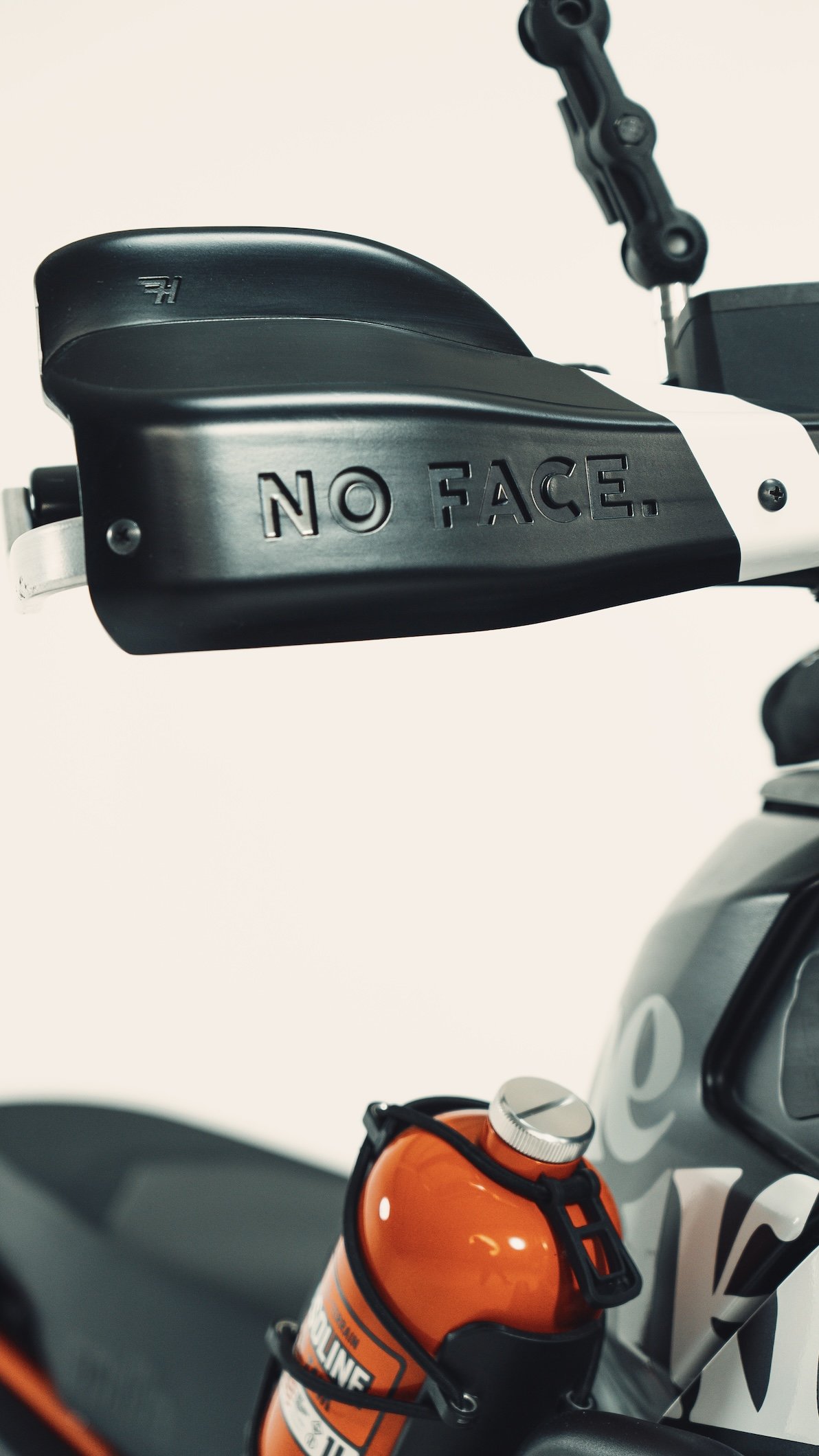
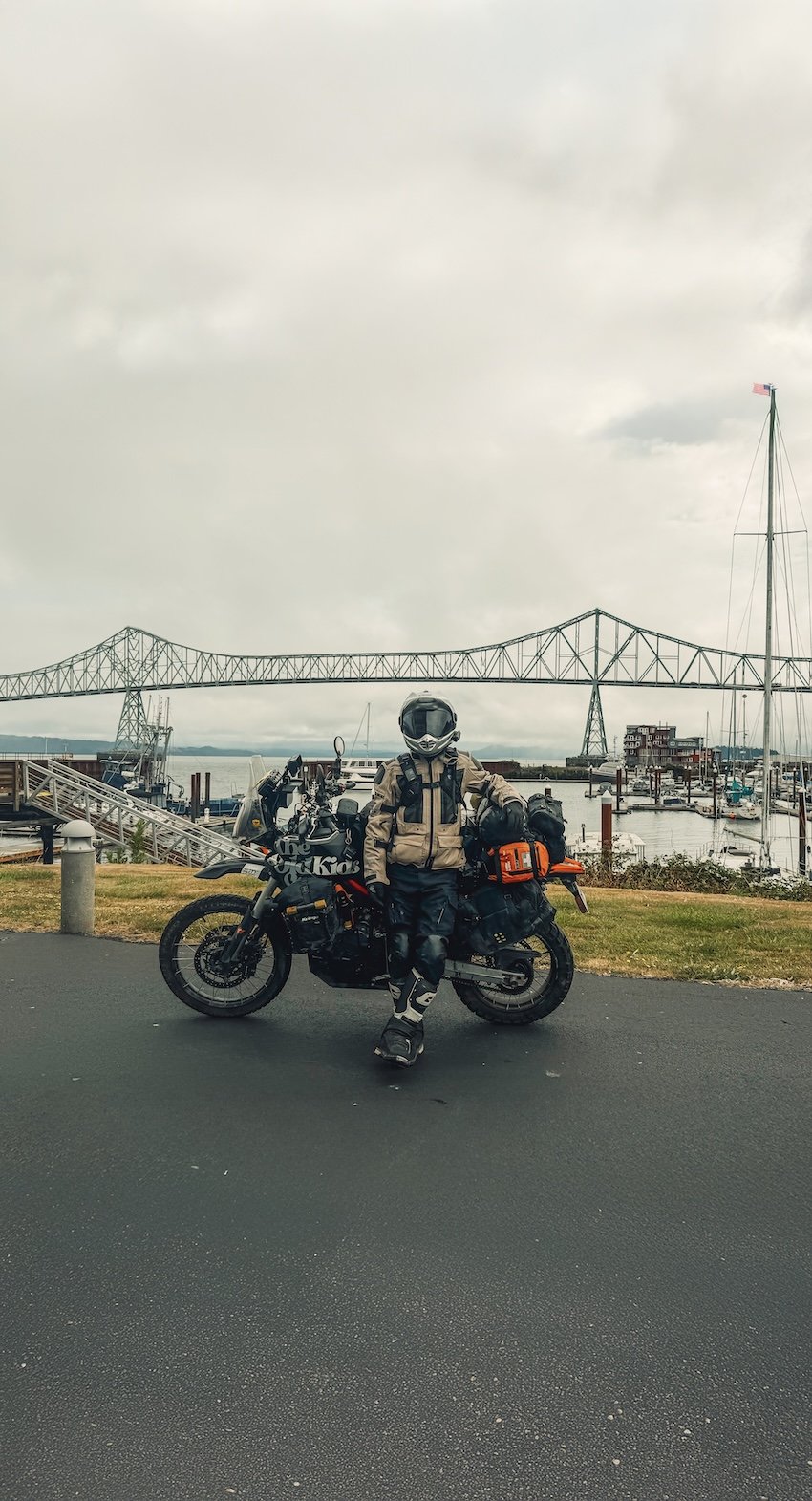
I never wanted the focus to be on who is behind Old Kids. ‘No Face / All Soul’ started out as a personal rule. It means putting your whole heart into what you do, without really needing to know who is behind it.
Old Kids is a place where I share a lot of personal thoughts and ideas. Starting it from zero, without a face or identity attached to it, allowed me to put those things out there without thinking too much about what someone who already knew me might think. Over time people started telling me they could look at a bike, a trip or a story and imagine it being them.
I’d much rather someone remember an image or an idea and think, ‘I want to do something like that,’ than remember who the person behind it was. There’s also something freeing about not thinking about how you look and just enjoying what you’re doing.
Are you trying to be the opposite of an influencer who puts themselves front and centre all the time?
Not really. I think there’s a difference between trying to influence someone and inspiring them. I’m much more interested in the second one.
I’m not trying to build an audience around me. I’d rather build a universe where people can genuinely connect with the things I share and maybe find something there that inspires them to go do their own thing.
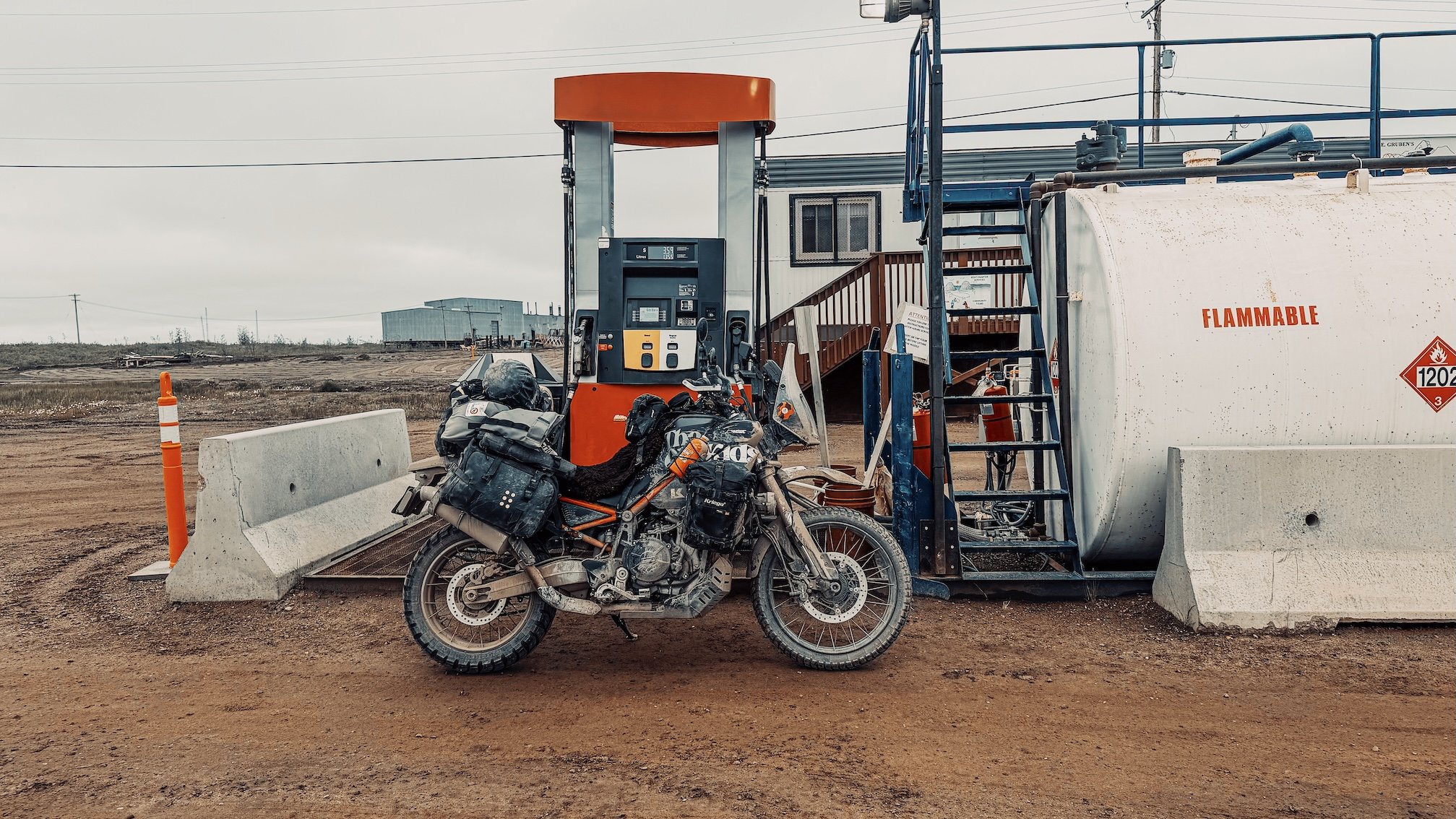
Tell us about the trip to Alaska.
Alaska had been that place I wanted to reach on a motorcycle, but while planning the trip I discovered there was another north that few people talked about, and that made things more interesting for me. Somewhere even more remote that you could still reach by road: Tuktoyaktuk, in the Northwest Territories of Canada.
That completely changed the goal. I realised I wasn’t looking for a destination anymore, I wanted something that felt more like an expedition.
Getting to Tuk meant riding the Dempster Highway and thinking about things I had never really had to think about on a motorcycle trip before. Fuel range, carrying extra gas, food, long distances without services, changing weather and being completely on my own in the middle of nowhere. Hundreds of kilometres of gravel, mud, ferries, wildlife and basically no signal.
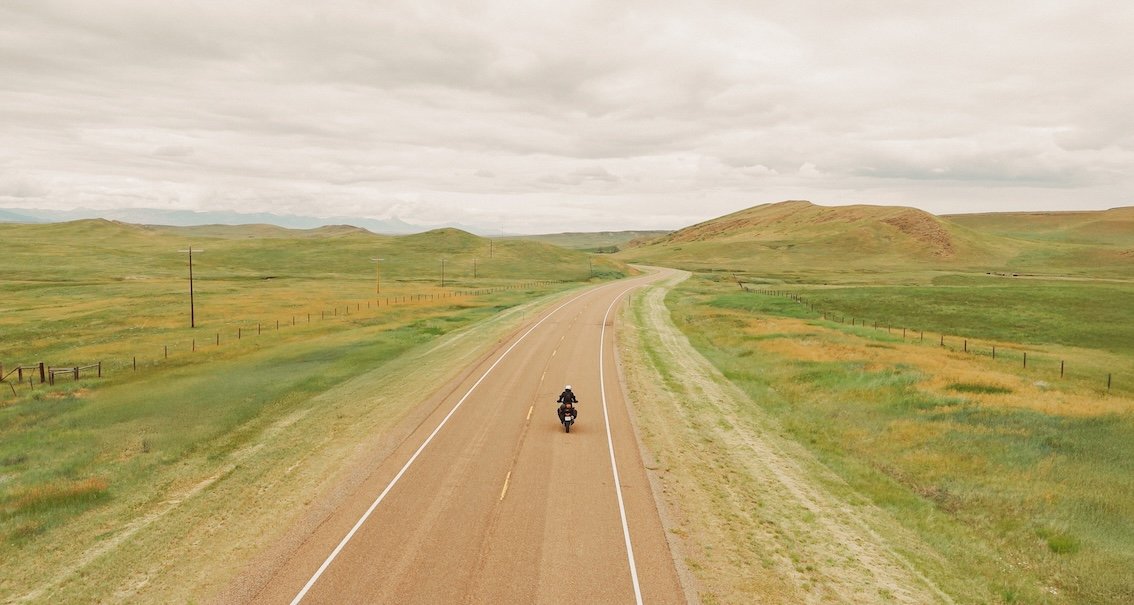
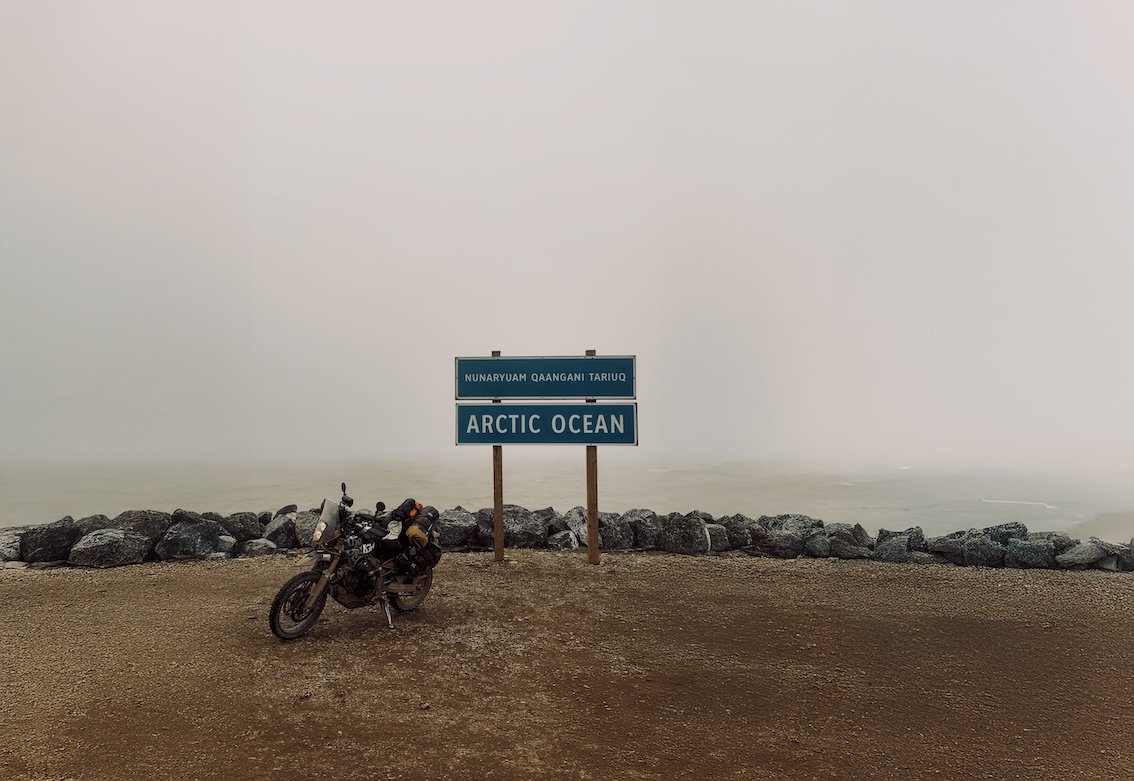
I left Mexico City alone, on the Tuareg, in June 2026. I crossed the US and Canada, rode the Dempster and eventually made it all the way to Tuktoyaktuk and the Arctic Ocean.
Standing there after everything it took to get there was pretty hard to explain. I remember setting up my tent right in front of the Arctic Ocean, with the same motorcycle next to me that I had ridden all the way from Mexico.
That was the place I had been thinking about for the entire trip.
For the way back I wanted to change the route completely. I headed towards Vancouver to visit some good friends, and from there rode down the US west coast on Highway 101, eventually finishing the trip by crossing back into Mexico.
No support vehicle, traveling solo and, surprisingly, not a single mechanical problem with the bike.
What were the high points and low points?
Obviously reaching the Arctic Ocean was one of them, but funnily enough, some of the best moments of the trip were much smaller.
There were days when I was completely alone, riding for hours without seeing almost anyone. Sometimes I would just stop the bike in the middle of an incredible place, look around and think, ‘How the hell did I end up here?’ Those were some of the moments I enjoyed the most.
The low points came too. There were days of exhaustion, cold, extreme heat, rain, and moments when I still had hundreds of kilometres ahead of me.
A friend told me something during the trip that really stuck with me: ‘Some days are for enjoying the ride, and some days are for making miles’. I think he was completely right. It’s easy to romanticise a trip like this and think every day is amazing, but that’s just not true. Some days you just have to keep moving.
There were incredible days and others that I genuinely just wanted to be over. I needed both to experience the trip the way I did.
What did you learn from the trip?
Probably one of the biggest things I learned is that being alone and feeling lonely are two completely different things. After so many hours inside your helmet, you eventually start talking to yourself, answering yourself, laughing and even yelling sometimes. At some point you start wondering if maybe you’re going a little crazy.
I also learned that no matter how prepared you think you are, a trip like this will eventually try to break you a little. When that happens, remember why you started, hold on to that and keep going.
I realised that a lot of the limits I thought I had were actually just things I had created in my head. Once I realised that it made me wonder what else I thought was impossible just because I hadn’t tried it yet.
OLD KIDS CO’s KRIEGA LUGGAGE
Javier: The first Kriega bag I bought was an OS-18 more than nine years ago, when I got my first big bike. At the time I was simply looking for luggage that I liked visually and that I could use every day.
I’ve always liked Kriega’s design because it’s clean, functional and, most importantly, timeless. There’s a lot of motorcycle gear that is very connected to a specific trend or aesthetic, and after a few years it can start to feel old. I never felt that with Kriega.
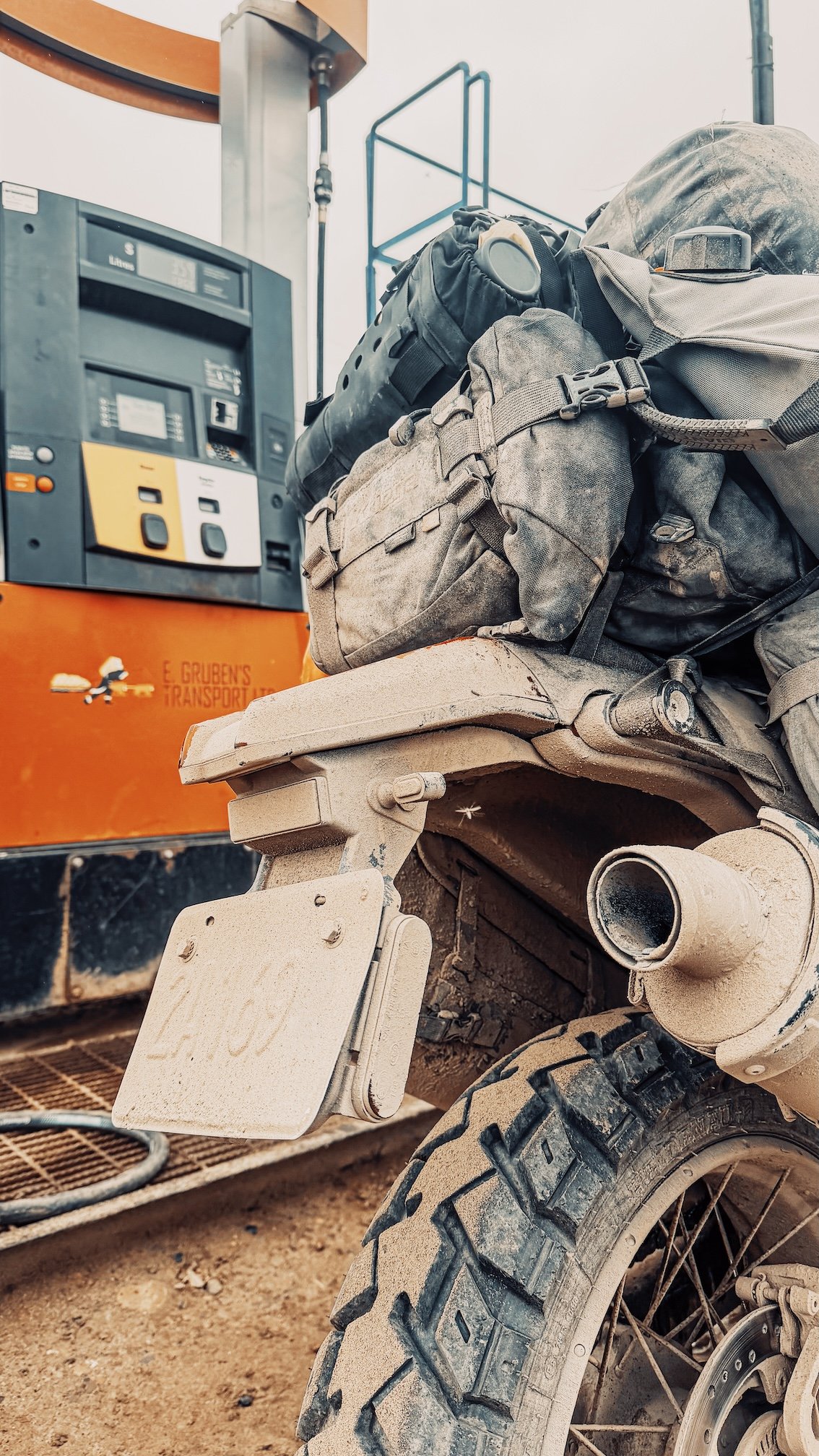
That first OS-18 ended up being the beginning of my whole luggage setup. Over the years I kept adding more pieces, and for this trip pretty much everything I carried on the bike was Kriega. It wasn’t something I specifically put together for this trip. It was simply the result of years of using the gear and trusting it.
And then there’s probably the most important reason: it works. That first OS-18 stayed with me for more than nine years, through different motorcycles, trips and all kinds of conditions.
After nine years and thousands of kilometres of rain, dust, mud and everything else I put it through, I think it did its job pretty damn well. I just went out and bought another OS-18 to replace it.
Follow @theoldkidsco on Instagram
To buy motorcycle luggage built to survive big miles, order directly from kriega.com or head to your local dealer for a closer look
Kriega UK dealer network
Kriega Worldwide importers